
Skin & nutrition
Tremella Mushroom for Skin Hydration: The Science Behind the Beauty Mushroom
What water-binding polysaccharides can tell us—and why topical findings do not prove hydration from an oral tincture.
Why snow mushroom attracts attention
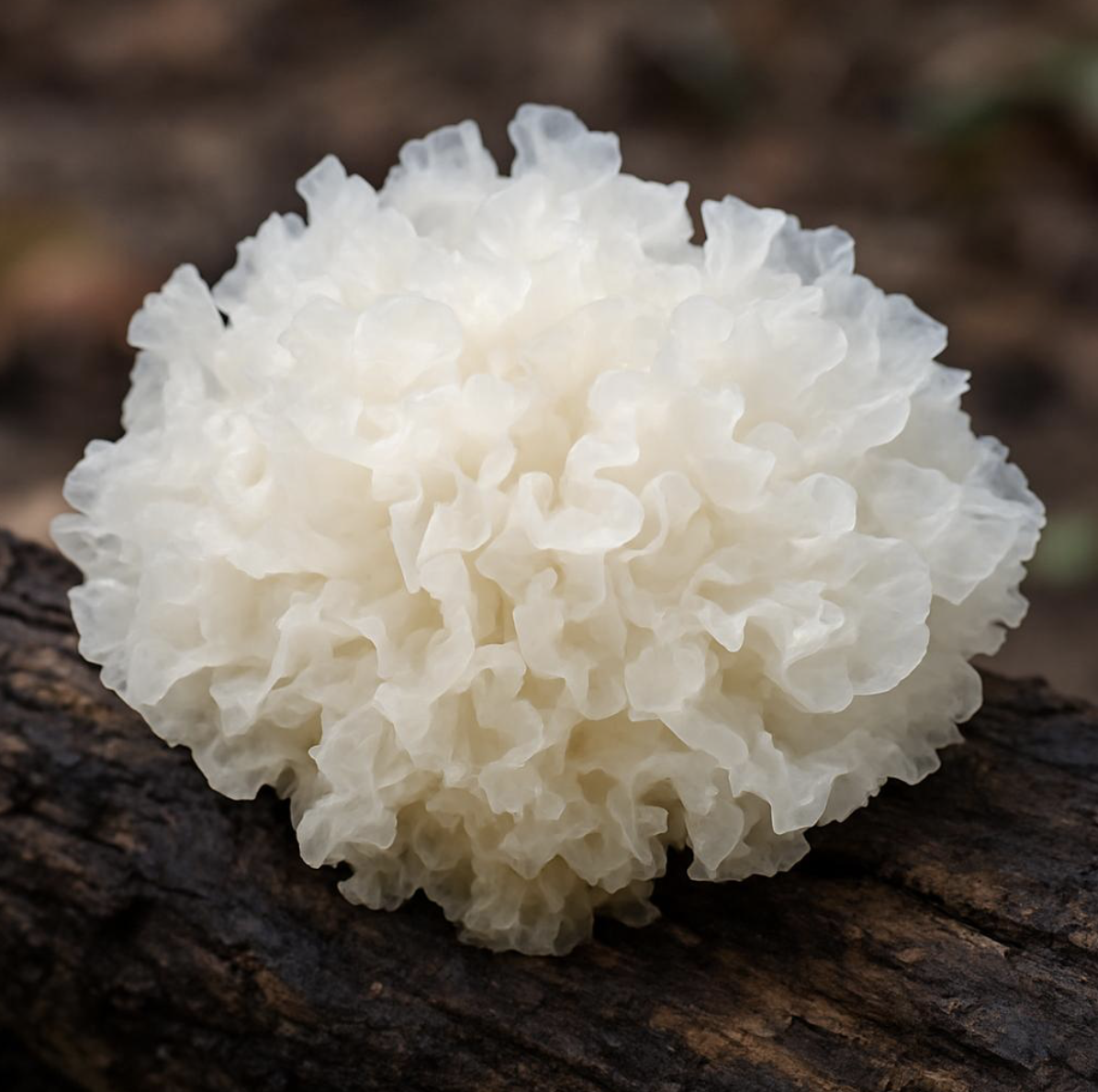
Tremella fuciformis is a translucent, frilled mushroom often called snow fungus. Its polysaccharides have drawn attention in formulation science because their interaction with water can be useful in moisturizing products. This is a legitimate area of research, but it is not the same as demonstrating that swallowing a mushroom tincture improves skin hydration.
The difference between a material's physical properties and a clinical effect matters. A polymer that retains water in a formulation may help that formulation perform on the skin. Once swallowed, the preparation encounters digestion and a different biological environment. Claims about “hydration from within” therefore require their own evidence.
Polysaccharides and water binding
Polysaccharides are carbohydrate polymers, not one universal active ingredient. Their size, structure, extraction, and formulation can influence behavior. Describing Tremella as rich in polysaccharides does not identify a specific clinically effective fraction or concentration.
Water-binding experiments answer questions about how a particular preparation behaves under tested conditions. They may inform cosmetic formulation work. They do not, by themselves, establish oral absorption, effects on skin tissue, or an effective daily serving. Comparisons with other moisturizers also depend on the test conditions and formulation, so broad “better than hyaluronic acid” claims are not justified here.
A small topical human study
Lourith and colleagues evaluated a Tremella-containing moisturizing hand sanitizer in 20 volunteers. Measured skin moisture improved relative to the vehicle during the short observation period. This is topical, formulation-specific evidence. It concerns the complete tested product, application conditions, and the measurement window.
A hand sanitizer study is not a trial of an oral supplement, and its result cannot be used to establish long-term skin improvements after consuming Tremella. Nor does a favorable short-term moisture reading automatically mean broader effects on aging, collagen production, or skin health.
Oral and topical animal research
Fu and colleagues investigated Tremella polysaccharides in a mouse model of dry skin, with oral and topical interventions. Such work helps explore whether administration route changes the experimental response. Animal models can generate hypotheses about mechanisms and future clinical designs.
However, model-induced dry skin in mice is not a direct substitute for human cosmetic concerns or clinical skin conditions. Researchers would need to establish whether the preparation, dose, and outcome translate to people. An animal finding should remain clearly labeled as animal evidence rather than appearing in an undifferentiated list of “proven benefits.”
Oxidative stress is not a beauty promise
Antioxidant-related experiments frequently appear in mushroom discussions. These may measure chemical radical-scavenging activity or responses in experimental systems. They do not establish that a person taking a tincture experiences visibly younger skin. The outcome that matters must be tested rather than inferred from a plausible pathway.
The dermatology review by Mineroff and Jagdeo discusses possible cutaneous applications and highlights the need for further clinical investigation. Its purpose is to map potential research directions, not certify an oral beauty supplement.
What an oral human study would need
A convincing oral hydration trial would describe the actual preparation and dose, use an appropriate control, recruit an adequate number of participants, and measure prespecified outcomes under standardized conditions. Baseline skin characteristics, climate, skincare routines, and other exposures can affect hydration measurements. The study should also report adverse effects rather than only favorable changes.
No convincing controlled human oral skin-hydration trial was identified in the sources reviewed for this article. That is a limitation of the evidence reviewed, not proof that no such study could ever exist.
Evidence and research limitations
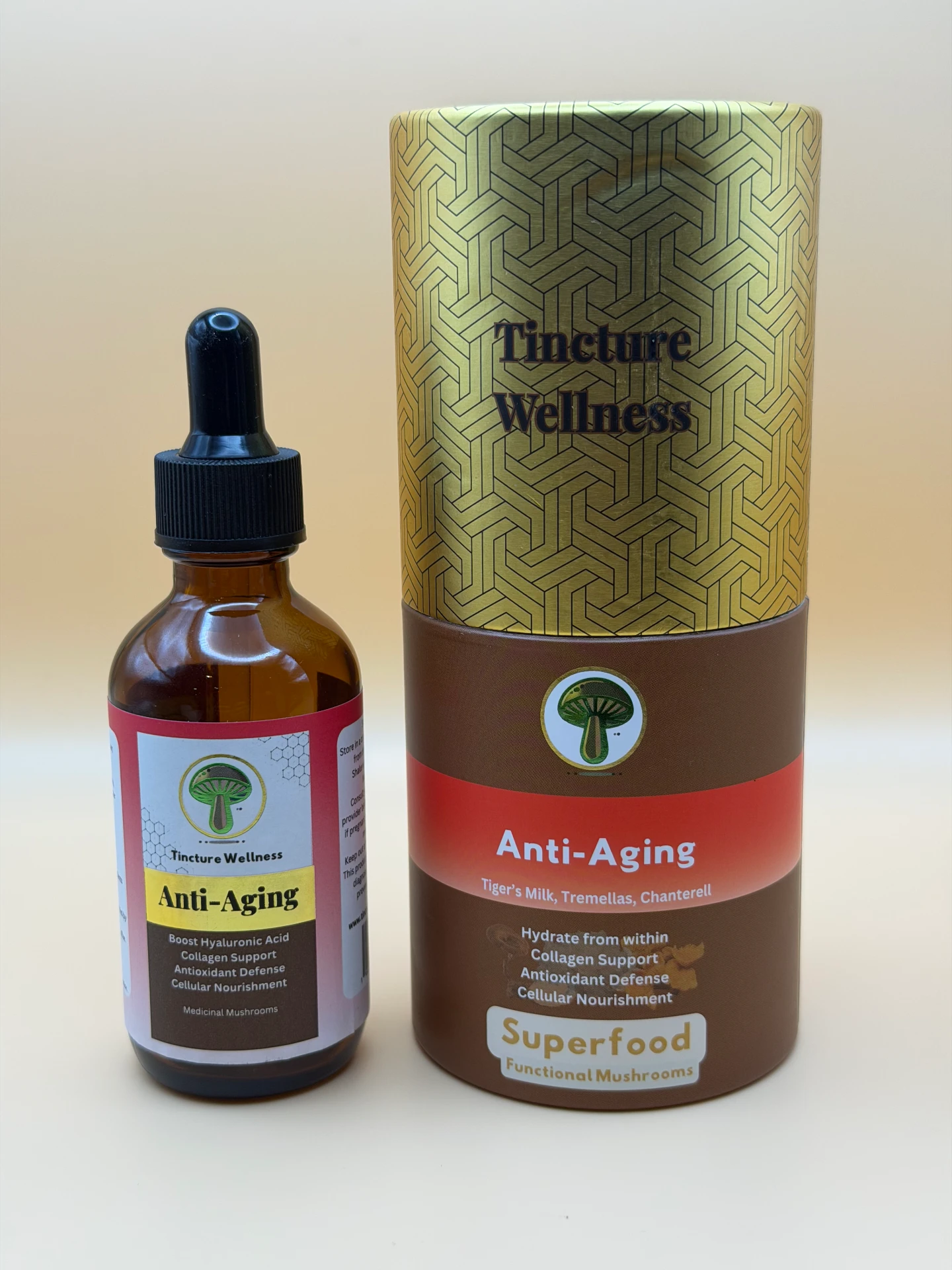
The strongest direct human hydration example cited here is topical and small. Oral support remains mainly experimental in this source set. The finished Anti-Aging tincture includes several ingredients and has not been shown here to reproduce a Tremella research preparation. Neither collagen enhancement nor oral hydration should be presented as a demonstrated product outcome.
Reading mushroom research responsibly
A useful study does more than name a mushroom. It describes the species, the part used, how the material was cultivated, the extraction process, the dose, and the outcome being measured. Those details determine what the results can reasonably tell us. Two products carrying the same mushroom name may have quite different chemical profiles. A powder, isolated polysaccharide, purified compound, and water-and-alcohol tincture should not be treated as the same intervention.
Laboratory experiments are valuable because they let researchers investigate mechanisms under controlled conditions. But a substance placed directly onto cells bypasses digestion, metabolism, distribution through the body, and the practical limits of a human serving. Animal research adds biological complexity without removing the differences between species. Human trials are more directly relevant, yet their usefulness depends on their design and the preparation actually tested.
When reading a human study, ask whether participants were randomly assigned, whether a placebo comparison was used, how many people completed the trial, and whether the outcome mattered to daily life. A change in a laboratory biomarker is not automatically a meaningful health benefit. Small studies can identify a promising question without answering it conclusively. Short studies also cannot reliably detect uncommon adverse effects or establish safety during years of use.
What this means for a finished tincture
This article is an educational overview, not a clinical assessment of Tincture Wellness products. The linked products have not been shown here to reproduce the doses, chemical profiles, or outcomes of the research preparations. A botanical ingredient on a label establishes what a manufacturer says is present; it does not by itself establish the concentration of an active compound or a demonstrated clinical effect.
Product-specific questions belong with product-specific evidence. Useful documentation includes identity testing, clearly stated extraction methods, relevant marker measurements, and contaminant testing. A certificate for one batch does not automatically describe every subsequent batch. Where a desired constituent has not been measured in the finished product, its amount should remain an open question rather than becoming a marketing assumption.
A thoughtful approach to safety
Before adding a supplement, discuss the exact product and ingredient list with a qualified healthcare professional if you take medication, have a medical condition, are pregnant or nursing, or are preparing for surgery. Mushroom allergy and the alcohol content of a tincture also deserve attention. Do not stop or replace prescribed treatment on the basis of an educational article. More ingredients and higher doses are not automatically better.
Keep the product label available and introduce changes cautiously enough that an adverse reaction can be recognized. Evidence gaps should not be interpreted as either proof of danger or proof of safety. The most scientifically honest answer is sometimes that the relevant question has not yet been tested in people using this preparation.
Frequently asked questions
Does this research prove the linked product works?
No. The references describe the preparations and populations used by the researchers. They are not clinical trials of the linked Tincture Wellness products.
Can an ingredient list tell me the amount studied?
Not on its own. An ingredient list is different from an independently measured constituent concentration per serving. Ask for product-specific information instead of translating a research dose from another extract.
Is this medical advice?
No. This is educational information intended to explain evidence and uncertainty. Individual decisions should be discussed with a qualified healthcare professional.
Why are the references important?
They allow readers to inspect what was actually tested, compare an article with its sources, and identify unanswered questions. Research changes over time, so conclusions should remain open to stronger evidence.
Scientific references
- Lourith et al. (2021). Formulation and efficacy evaluation of the safe and efficient moisturizing snow mushroom hand sanitizer.
Topical study in 20 volunteers; short-term moisture measurements.
- Fu et al. (2019). Comprehensive Evaluation of Dry Skin and Intervention of Tremella Polysaccharides Based on the Model Mice with Outer-dry Skin.
Mouse model; oral and topical routes.
- Mineroff and Jagdeo (2023). The potential cutaneous benefits of Tremella fuciformis.
Dermatology review; clinical research gaps.
From the apothecary
Explore the ingredients
These products are not the preparations tested in the studies above.
Recommended reading
Letters from the journal
A little more nature.
A little more understanding.
Mushroom research, thoughtfully explored.